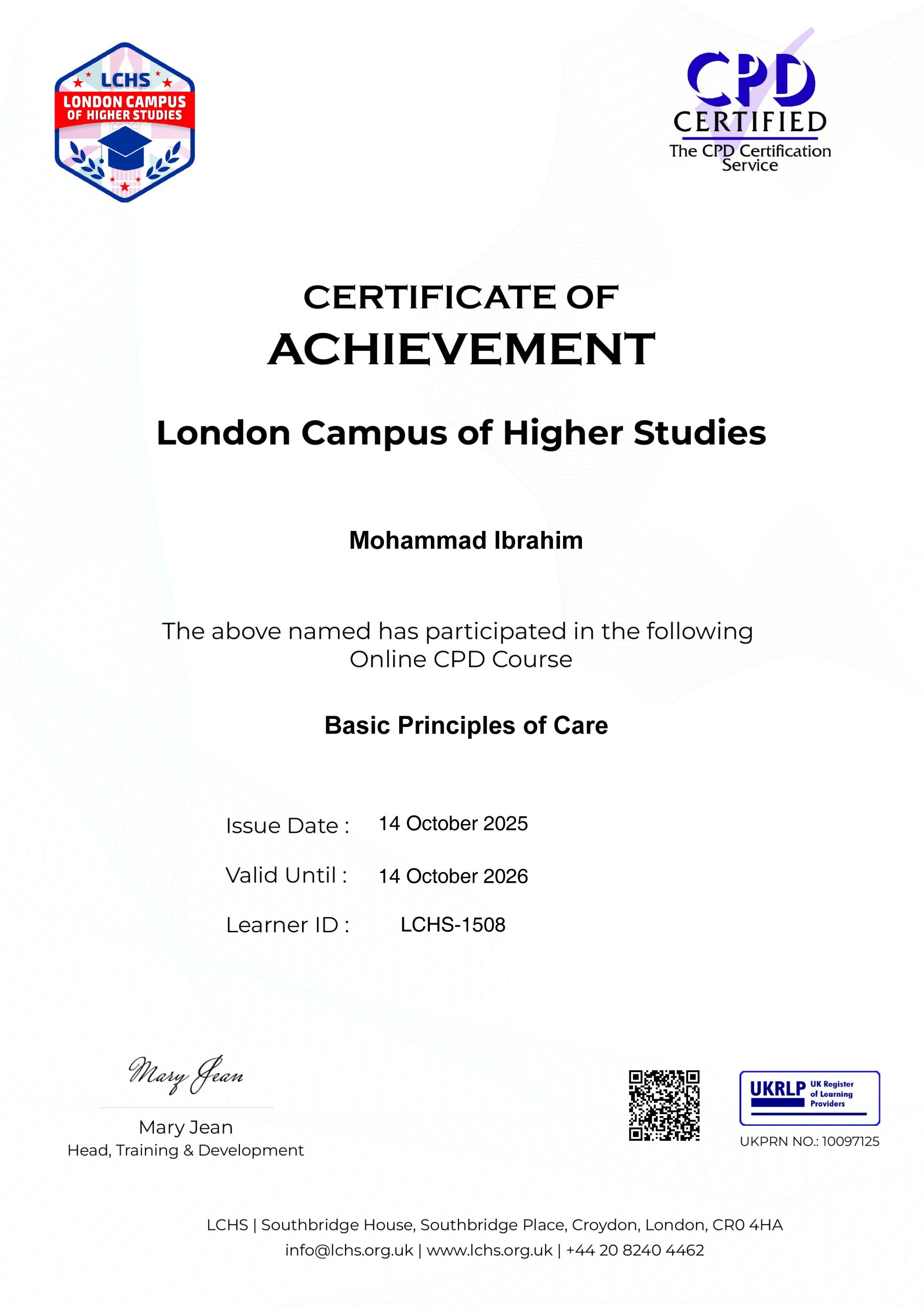
Certificate in

Safeguarding Adults in Health and Social Care Industry

Safeguarding Adults in Health and Social Care Industry

Protecting vulnerable adults is a vital responsibility in the health and social care sector, and this online course from LCHS offers a comprehensive understanding of safeguarding practices. Learners will explore how safeguarding is defined within the industry, the legal frameworks that support it, and the UK government’s initiative of Making Safeguarding Personal (MSP). The course examines the roles of regulatory bodies and local authorities, the concept of vulnerability, and the reasons adults may be classified as vulnerable in care settings. It also addresses the nature of abuse, how referral systems operate, and ways to improve safeguarding processes through best practices and ethical decision-making. Participants will gain insights into the needs and dilemmas faced by vulnerable adults, supported by relevant statistics and future-focused guidance aligned with CQC standards.

  • Duration: 60 - 120 Minutes | Flexible Duration
  • Mode of Study: 100% Online Learning Environment | Study from any location, on any device.
  • Certificate: Immediate digital certificate issuance upon completion
  • Unlimited assessment: Retakes at no additional cost

Course Price

£9,99
 
CPD Credits: 2

Key Features

  • Defines safeguarding adults within the context of health and social care
  • Explores the legal framework and industry-specific regulations that guide safeguarding practices
  • Highlights the UK Government’s Making Safeguarding Personal (MSP) initiative and its impact
  • Examines the roles of regulatory bodies and local authorities in protecting vulnerable adults
  • Clarifies what constitutes vulnerability and why certain adults are classified as vulnerable
  • Discusses various forms of abuse and outlines how the referral system operates
  • Identifies ways to improve safeguarding processes and promote person-centred care
  • Shares industry best practices for protecting vulnerable individuals in care settings
  • Addresses the unique needs and dilemmas faced by vulnerable adults
  • Presents relevant statistics to contextualize safeguarding challenges and progress
  • Considers the legal and ethical implications of safeguarding responsibilities
  • Suggests strategies for enhancing safeguarding practices across the profession
  • Introduces benchmarking tools to evaluate safeguarding effectiveness
  • Looks ahead to the future of safeguarding with reference to CQC guidelines
  • Summarizes key takeaways to strengthen professional awareness and accountability in safeguarding adults in care environments

Learning Outcomes

Upon completion of this development material, learner will be able to understand:

  • How Safeguarding Adults is Defined in the Health and Social Care Industry
  • Legal Framework Applicable to Safeguarding Adults – Industry Perspective
  • UK Government Input to the Safeguarding of Adults – Making Safeguarding Personal (MSP)
  • Regulatory Bodies and the Local Authorities’ Role in This Domain
  • What is Vulnerability and Why Are Adults Classified as Vulnerable in Health and Social Care
  • What is Abuse and How the Referral System Works in the Industry
  • How the Safeguarding of Vulnerable Adults Process Could Be Improved
  • Industry Best Practices in Safeguarding Vulnerable Adults
  • Vulnerable Adults and Their Needs
  • Safeguarding of Vulnerable Adults: Dilemmas
  • Vulnerable Adults and Their Special Needs
  • Statistics About the Safeguarding of Vulnerable Adults in Health and Social Care Profession
  • Legal and Ethical Implications in the Safeguarding of Vulnerable Adults
  • How Can We Improve the Safeguarding of Vulnerable Adults in Health and Social Care Profession
  • Benchmarking the Safeguarding of Vulnerable Adults in Health and Social Care Profession
  • Future of Safeguarding Vulnerable Adults and CQC Guidelines
  • Takeaways from Safeguarding Adults in Health and Social Care Industry

Delivered and Certified By

This program is delivered by the London Campus of Higher Studies – LCHS, a reputable institution committed to academic excellence and professional development. Upon successful completion, participants are awarded a certificate accredited by CPD, ensuring global recognition and alignment with continued professional development standards.

Frequently Asked Questions

What is the aim of this course?

The course provides an in-depth understanding of how safeguarding adults operates within health and social care. It defines core principles, outlines the legal and ethical landscape, and explores professional responsibilities in protecting vulnerable adults from harm.

Who should take this course?

This course is essential for professionals across the health and social care sector—including support workers, care coordinators, nurses, and managers—who play a role in safeguarding and promoting the well-being of at-risk adults.

Will I receive a certificate?

Yes! Upon successful completion, you’ll receive a CPD UK-accredited certificate by London Campus of Higher Studies – LCHS —a valuable addition to your professional portfolio.

How long does it take to complete the course?

Most learners complete the course in 1–4 hours, depending on their pace and schedule flexibility.

Do I need any prior qualifications?

No prior qualifications are needed. This course is designed to be accessible to anyone with an interest in caregiving.

Is this recognised by employers?

Yes, London Campus of Higher Studies – LCHS is an official member of renowned CPD certification service and CPD UK accreditation is widely recognised by employers across the health and social care sectors, adding credibility to your resume or career progression goals.